Lightweight EDC for Hiking and Flying: What Cleared TSA on a Bryce Canyon and Zion Trip
Silent Thunder Ordnance
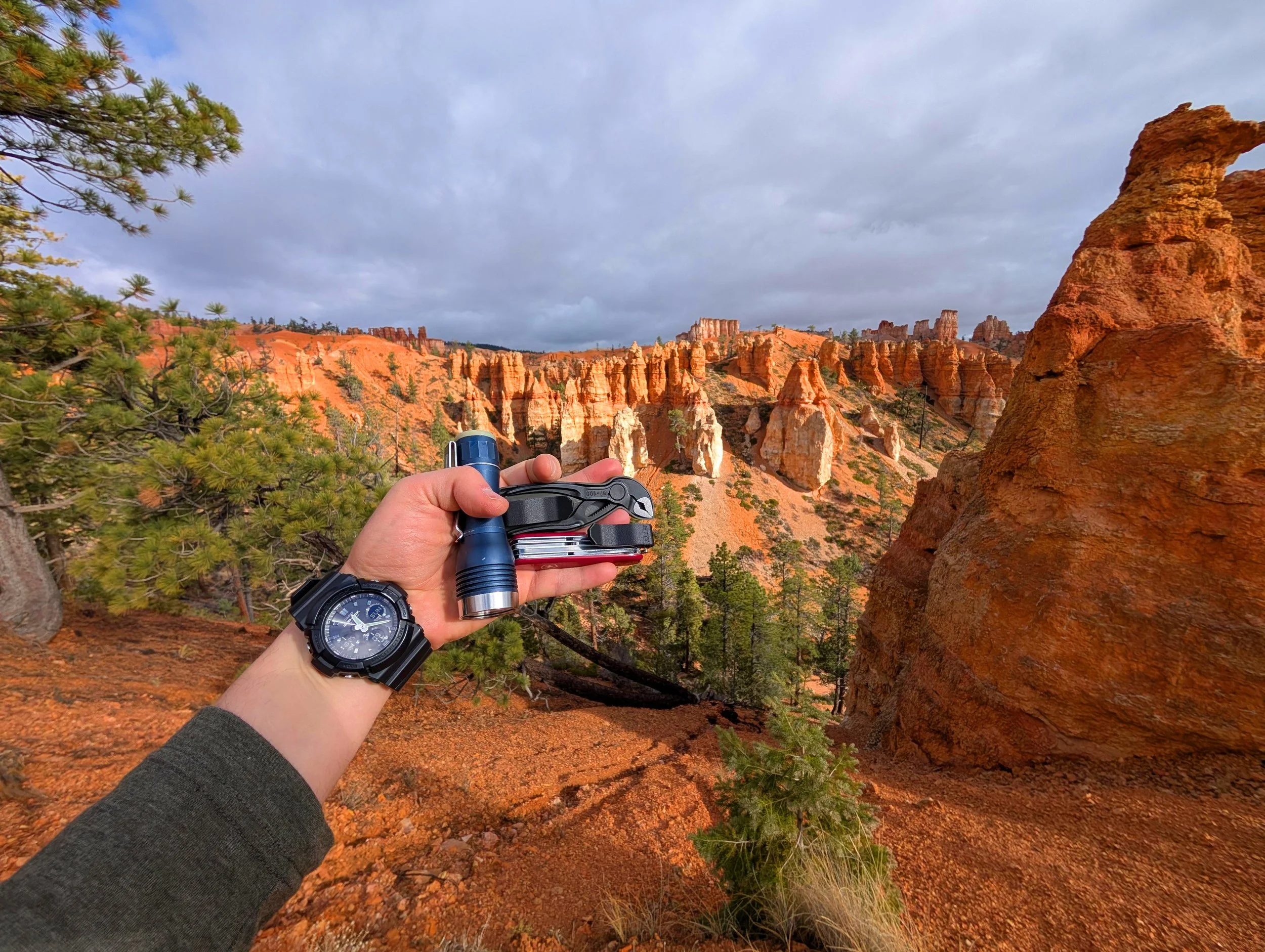
When you’re huffing uphill at 8,000 to 9,000 feet with a lot of vertical delta, “ounces are pounds, and pounds are pain” stops being a saying and becomes a packing strategy. A recent 50-mile, four-day trip through Bryce Canyon and Zion National Parks was a good test of which everyday carry (EDC) gear is actually worth carrying.
Nobody sponsored the trip, paid for it, or encouraged me to use STO gear. Everything below came from our catalog because it felt worth the weight.
The Constraints: Altitude, Weight, and Air Travel
Weight was the first constraint. Air travel was the second. Everything had to fit in a carry-on and clear TSA, or be cheap and easy to buy at the destination, since anything else has to be shipped home or abandoned.
TSA also has to hassle you about something, and this time the menace to national security was an unopened stick of hard salami. The bag was pulled open and inspected, and the outside of the plastic wrap got rubbed down with some odd little tool. The rules are posted in plain English, then reinterpreted on the spot by whoever happens to be working the belt, so the packing list assumed the least charitable reading.
Five STO Pieces That Earned Their Weight
Knipex Cobra Carrier
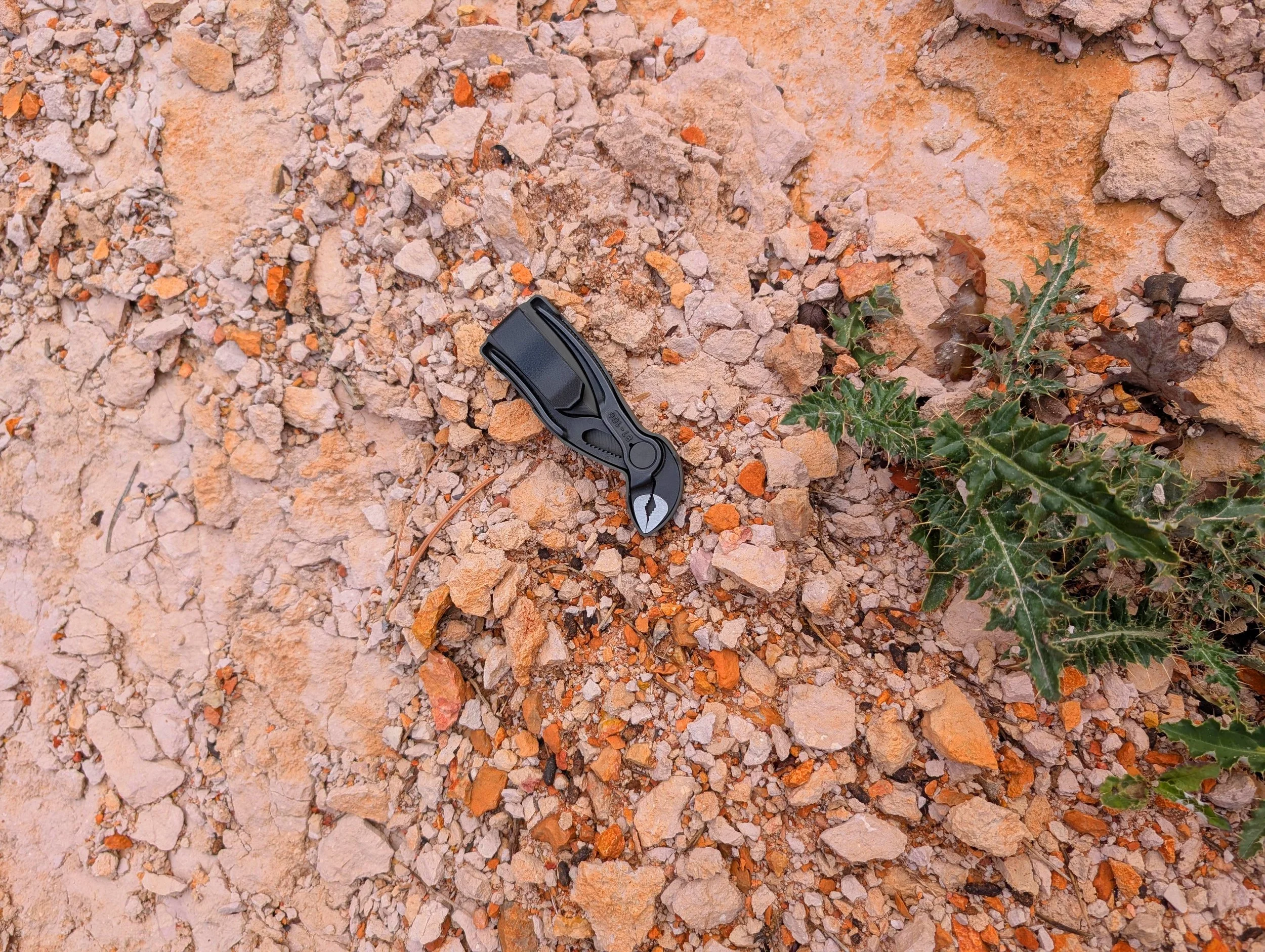
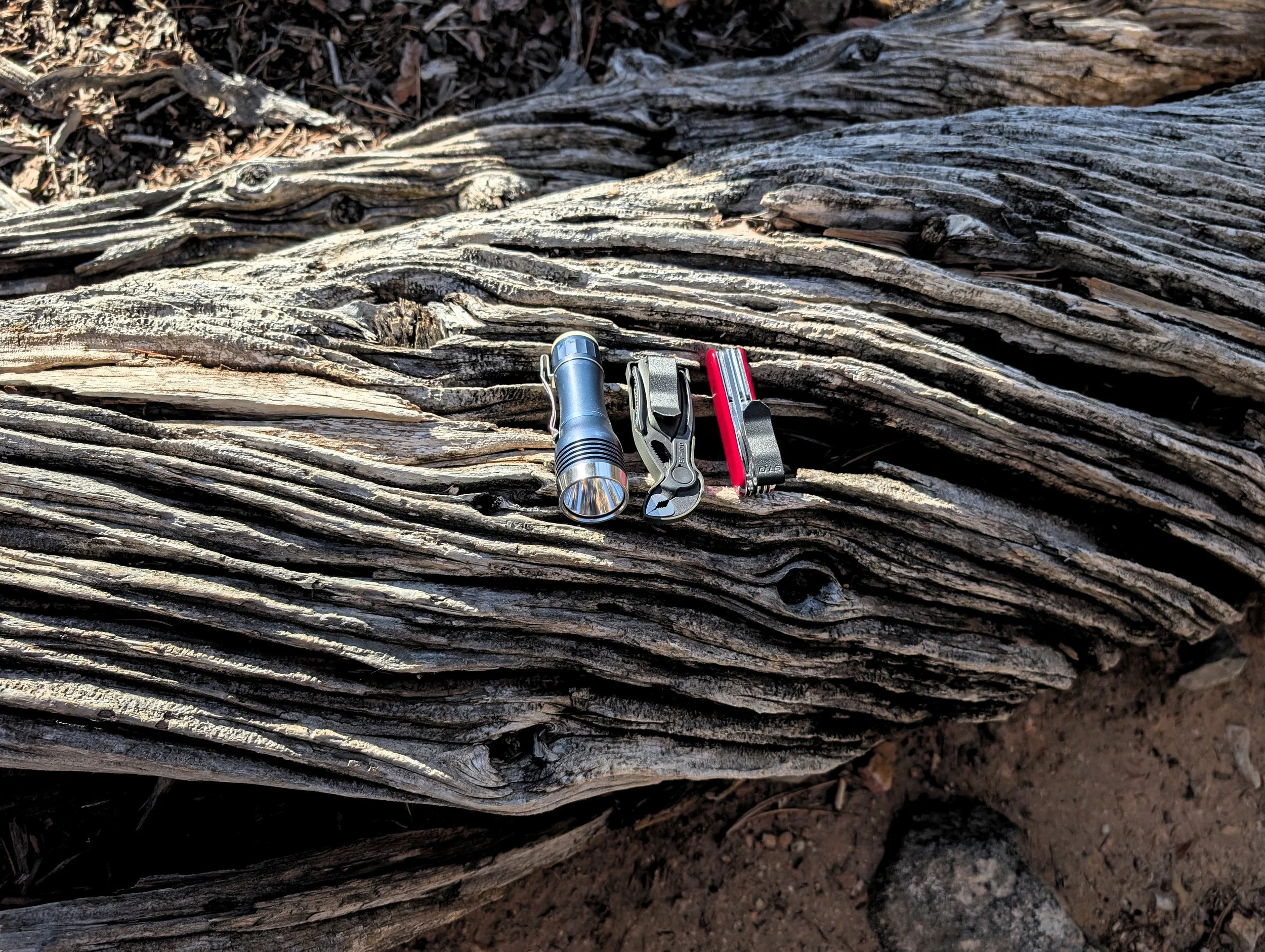
A dependable pair of pliers solves more problems outdoors than you’d expect: bending a replacement boot eyelet into place, lifting a hot dish off a campfire, freeing something stuck, cracking a nut in the shell. Knipex Cobras reliably clear TSA, especially when they ride in the bag instead of the pocket. The Knipex Cobra Carrier protects the pliers from sweat and keeps them easy to grab. With the lume insert installed, the carrier weighs 14.65 grams.
Lume Insert
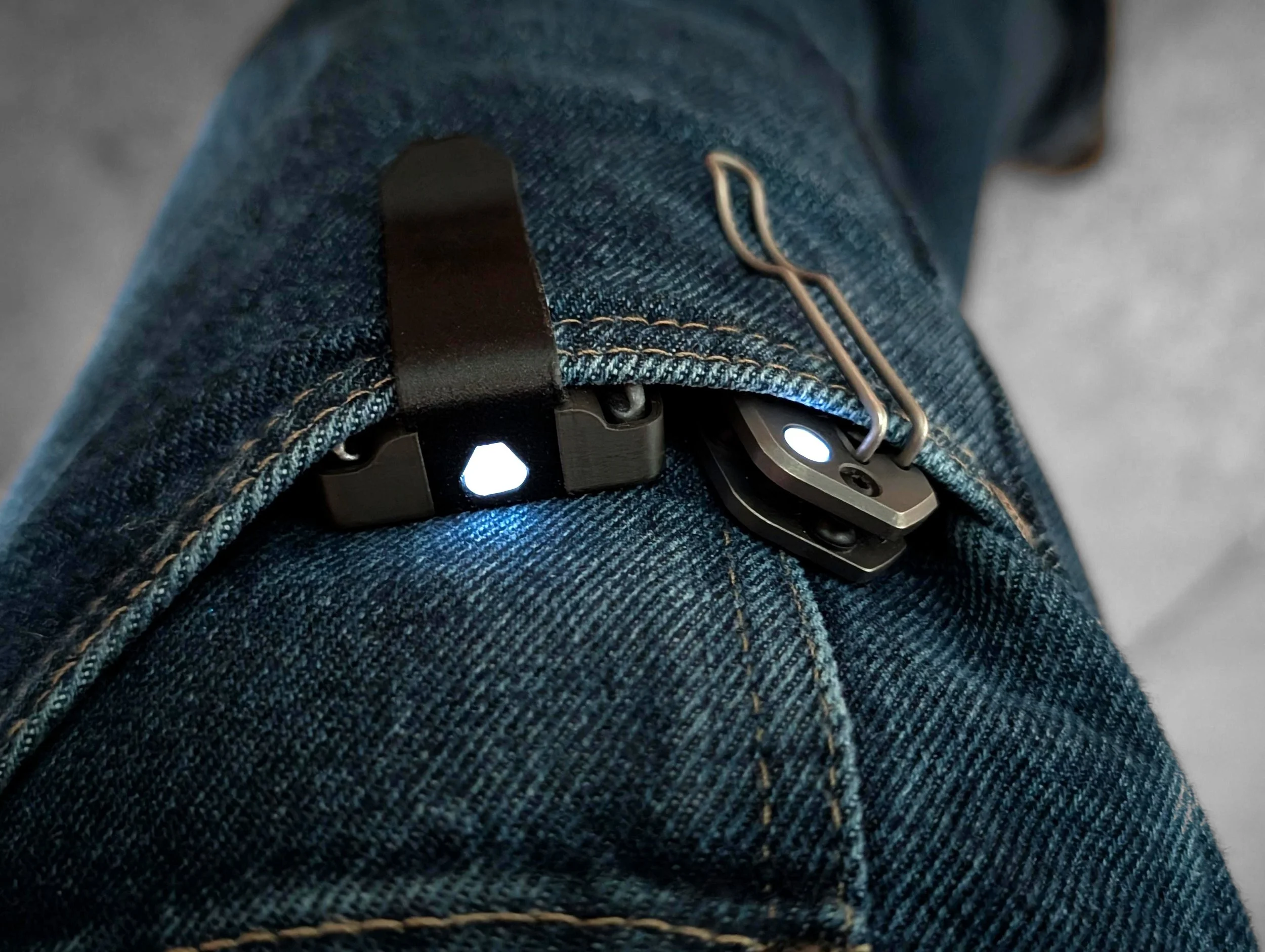
The Lume Insert goes inside the Cobra Carrier so the pliers are easy to find in the dark.
SAK Pocket Clip
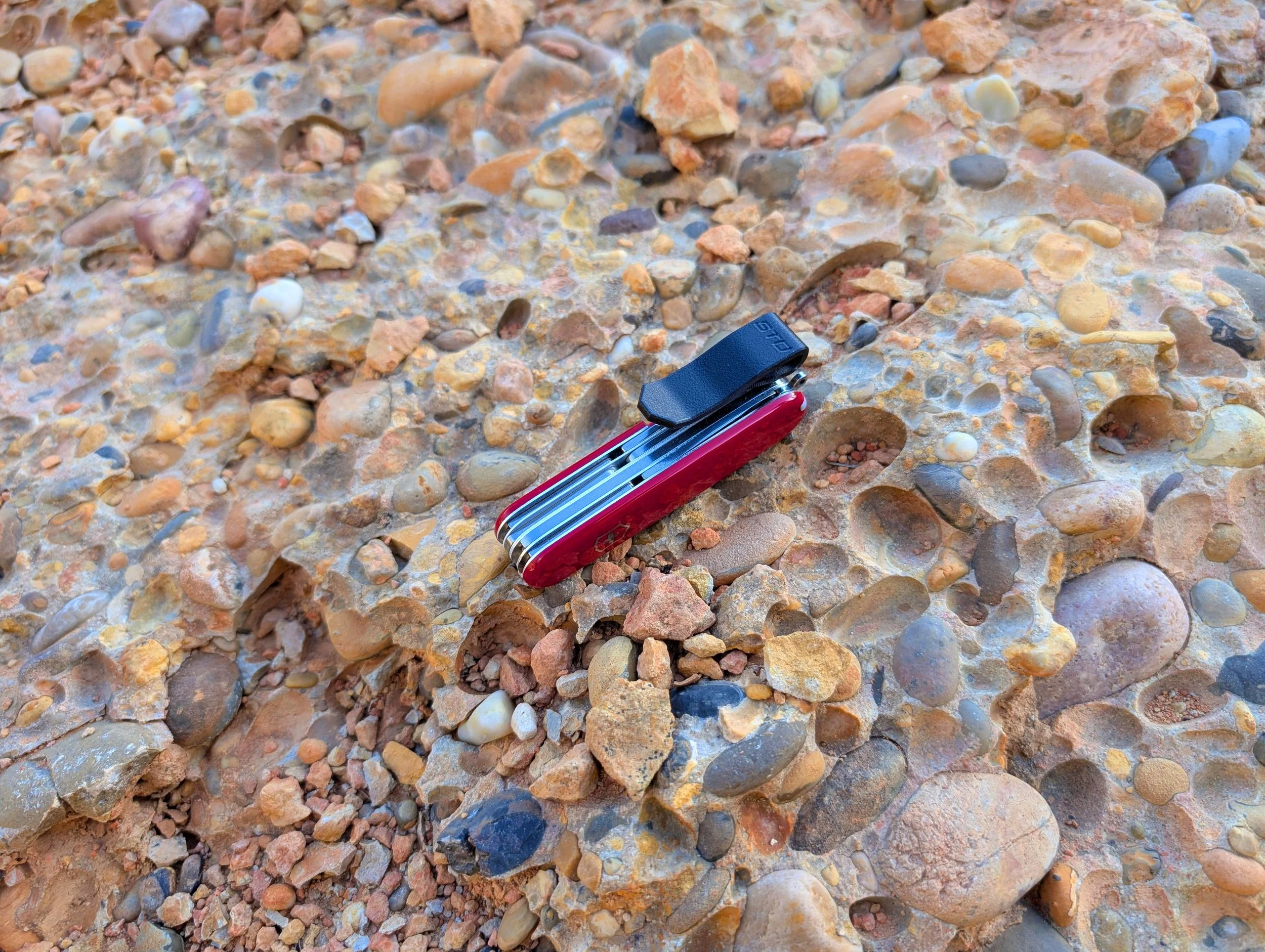
You need a knife when hiking. Cutting moleskin, prepping food, building an emergency splint or stretcher from whatever is on hand: it’s the archetypal human tool. A Victorinox Swiss Army Knife (SAK) hits the sweet spot for price, availability, and utility, and a standard carry-on can’t hold a blade, so this one was bought at a Walmart after landing. The Explorer had the best tool set of the models on the shelf.
A SAK is not a first-choice tool. Judged one at a time, nothing on it is the best option. The blade is passable, and so is every other tool on it. Stack enough passable tools together, though, and what comes out the other side is a lot of capability. A SAK is also smaller and lighter than a comparable multitool like a Leatherman, so the trade is more tools that are each a little worse over fewer tools that are a little better but still not great. With a pack on and 8,000 feet under your boots, the lighter one wins.
The SAK Pocket Clip solves three common SAK problems: it keeps the knife easy to reach, keeps lint and dirt out of the tools, and keeps it from falling out of your pocket when you sit down.
SAK Pin
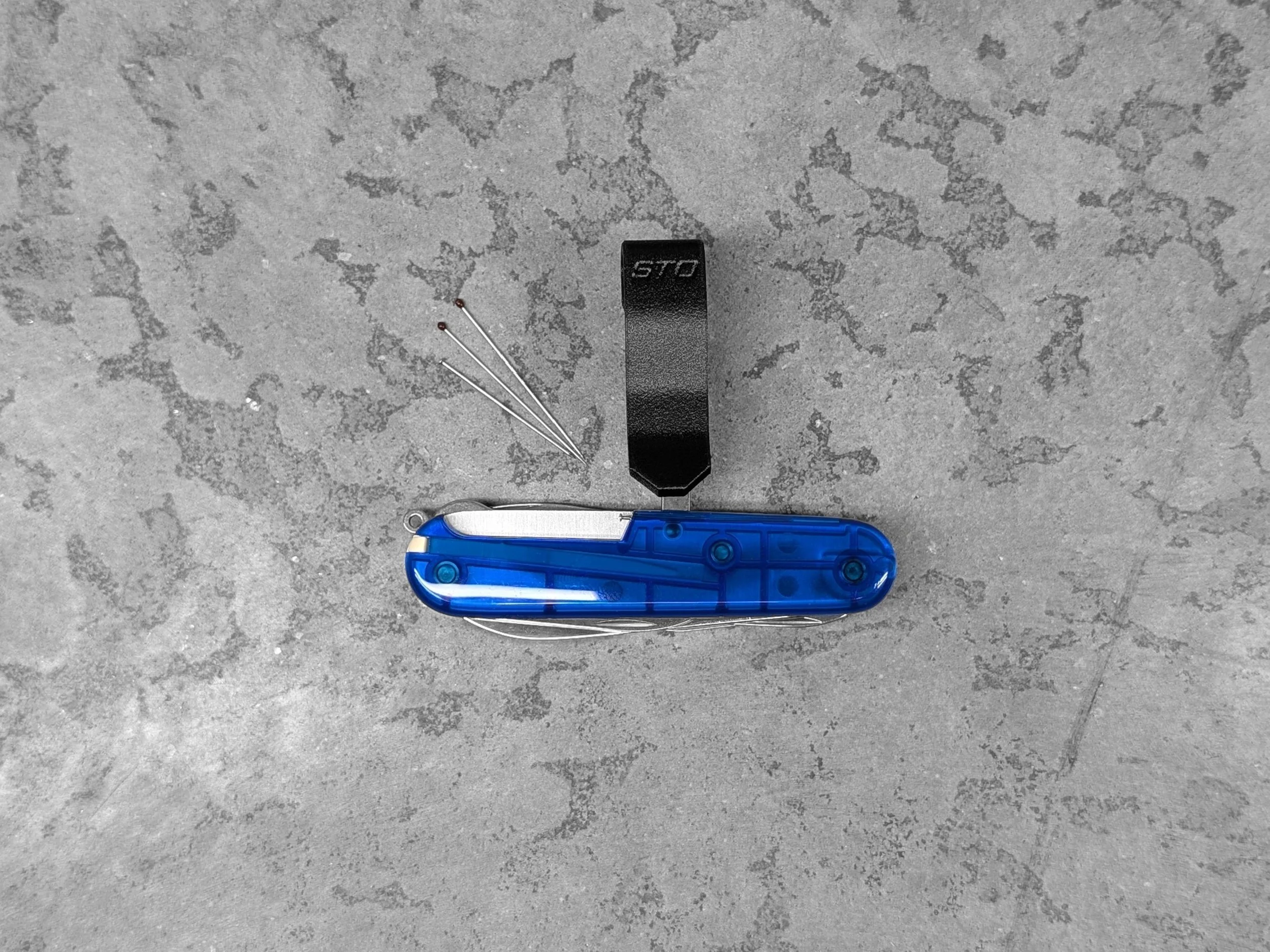
The SAK Pin weighs almost nothing and is expressly permitted through TSA checkpoints. Yes, the same agency that rubbed down a sealed salami waves through a sharpened steel spike you could absolutely put an eye out with. You only need a pin on occasion, but when you do, not much else replaces it. The SAK Pocket Clip ships with a set of pins, while most medium-size SAKs have a slot for a pin and don’t include one.
Flashlight Glow Ring

What illuminates the illuminator? A flashlight is indispensable, but only if you can find it in the dark. Passive illumination on every flashlight solves that and adds almost no weight. The Flashlight Glow Ring is a custom tail ring designed for the NOCTIGON KR1, one of the highest-performance pocket throwers on the market.
The Rest of the Pack
Beyond those five pieces, the kit was food, a first aid kit (including moleskin), extra layers, an emergency mylar blanket, a contractor garbage bag (a wildly underrated piece of emergency gear), a compass, a map, and 1.5 to 3.5 liters of water depending on the day. Water was, by far, the heaviest item.
Design: A Wall Display for .62 Caliber Blowguns
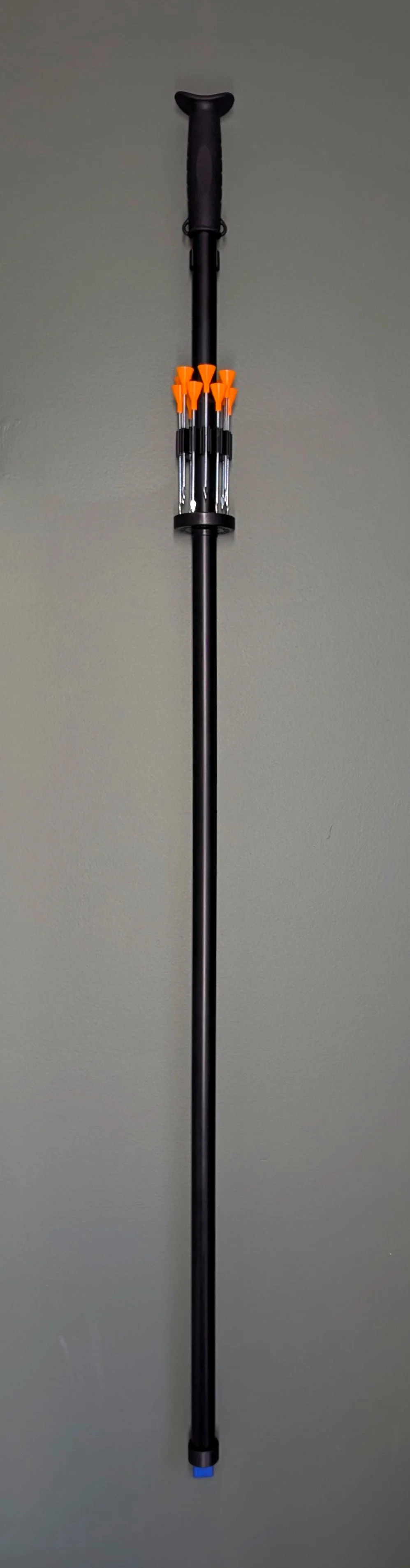
Most blowguns end up leaning in a corner or lying on a shelf, which is a good way to get one knocked over or lost behind other gear. The blowgun wall display puts one on the wall where you can see it and reach it.
It holds one .62 caliber blowgun with a 22mm outer diameter, which covers popular models from Cold Steel and Slockmaster. Mounting uses 3M Command strips, so there are no screws and no holes in your wall. The dovetail accents hide the Command pull tabs and add a pop of color, including glow-in-the-dark options.
Design in Progress: Two New Crysknife Sizes
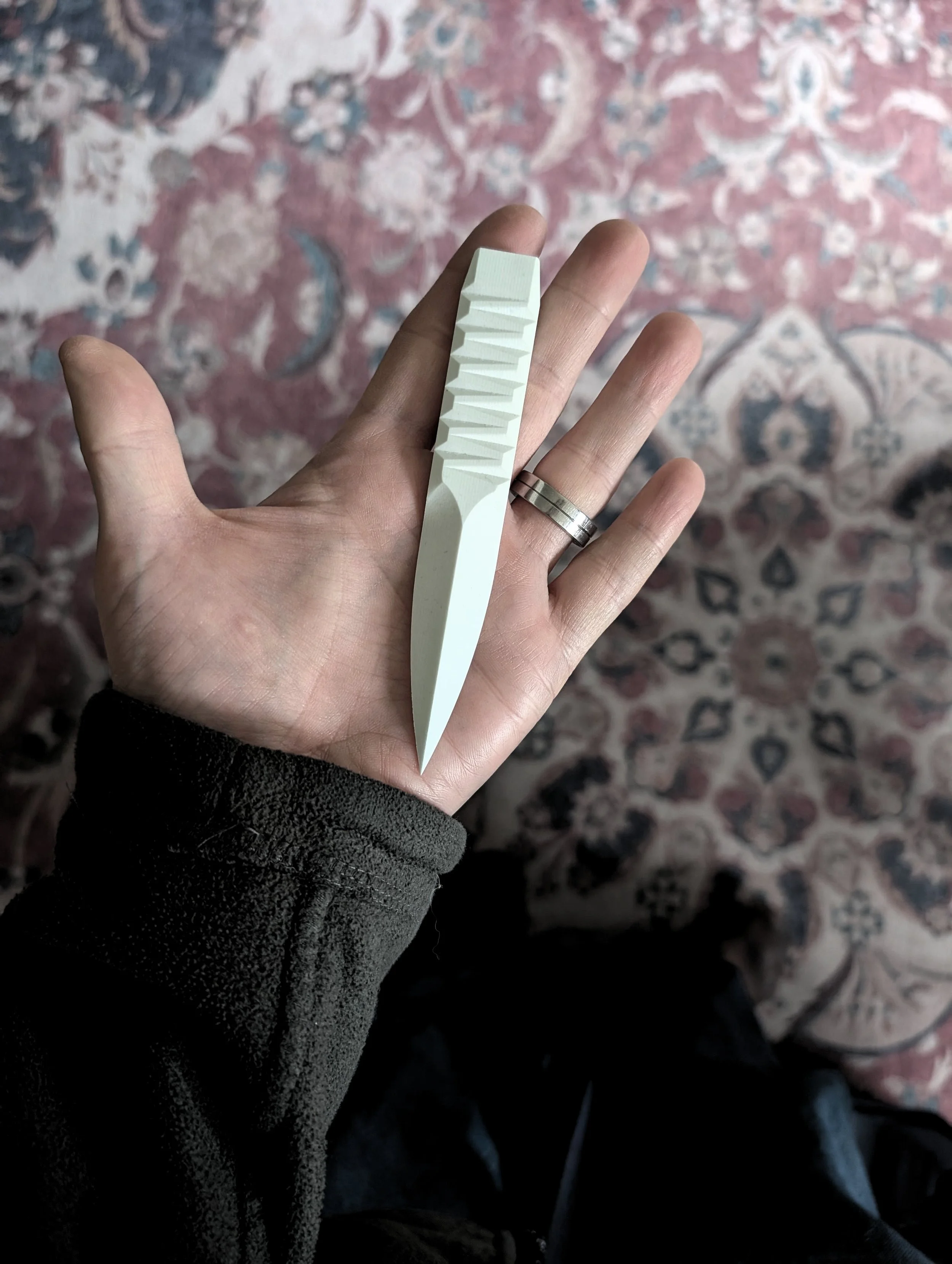
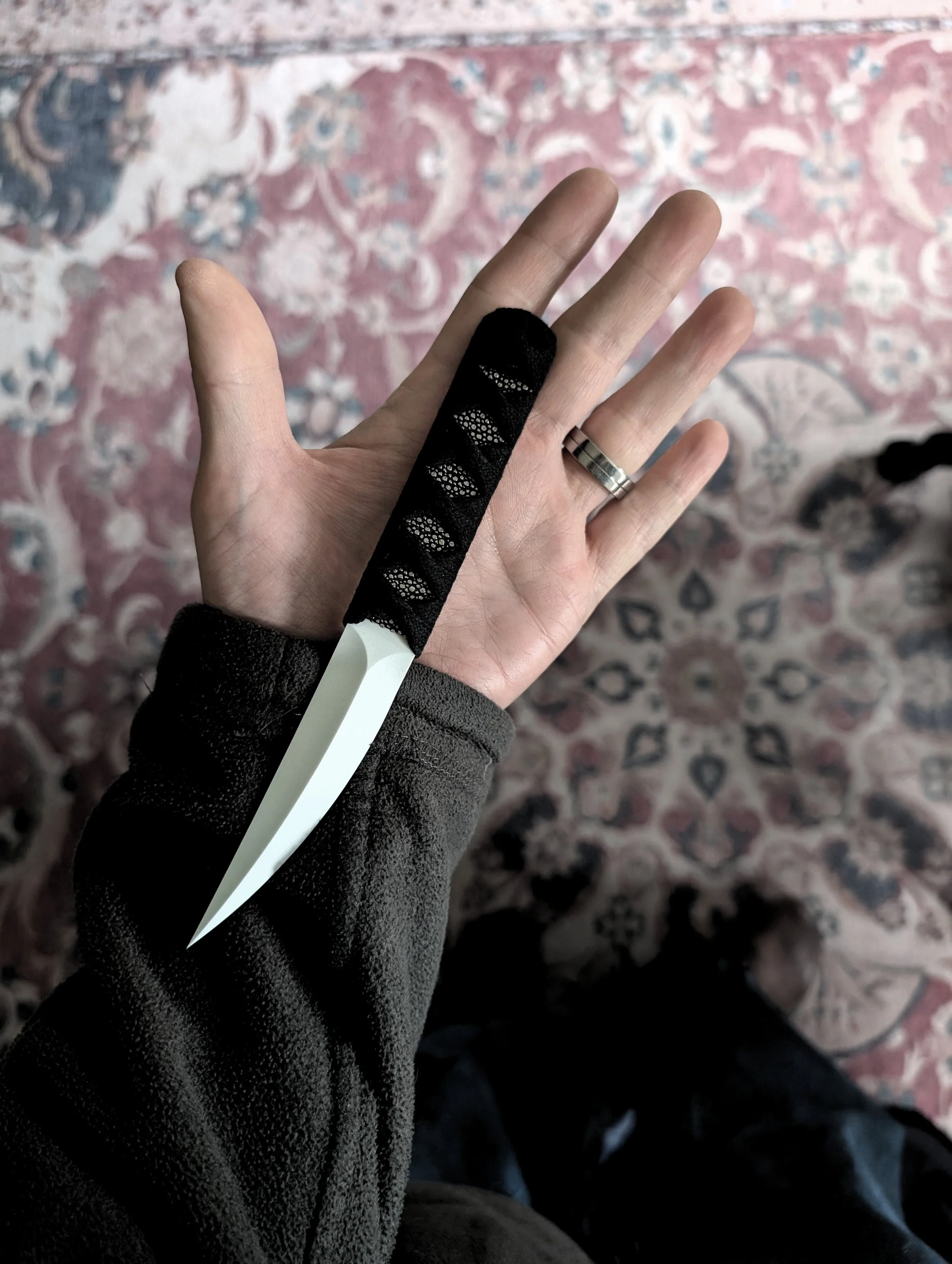
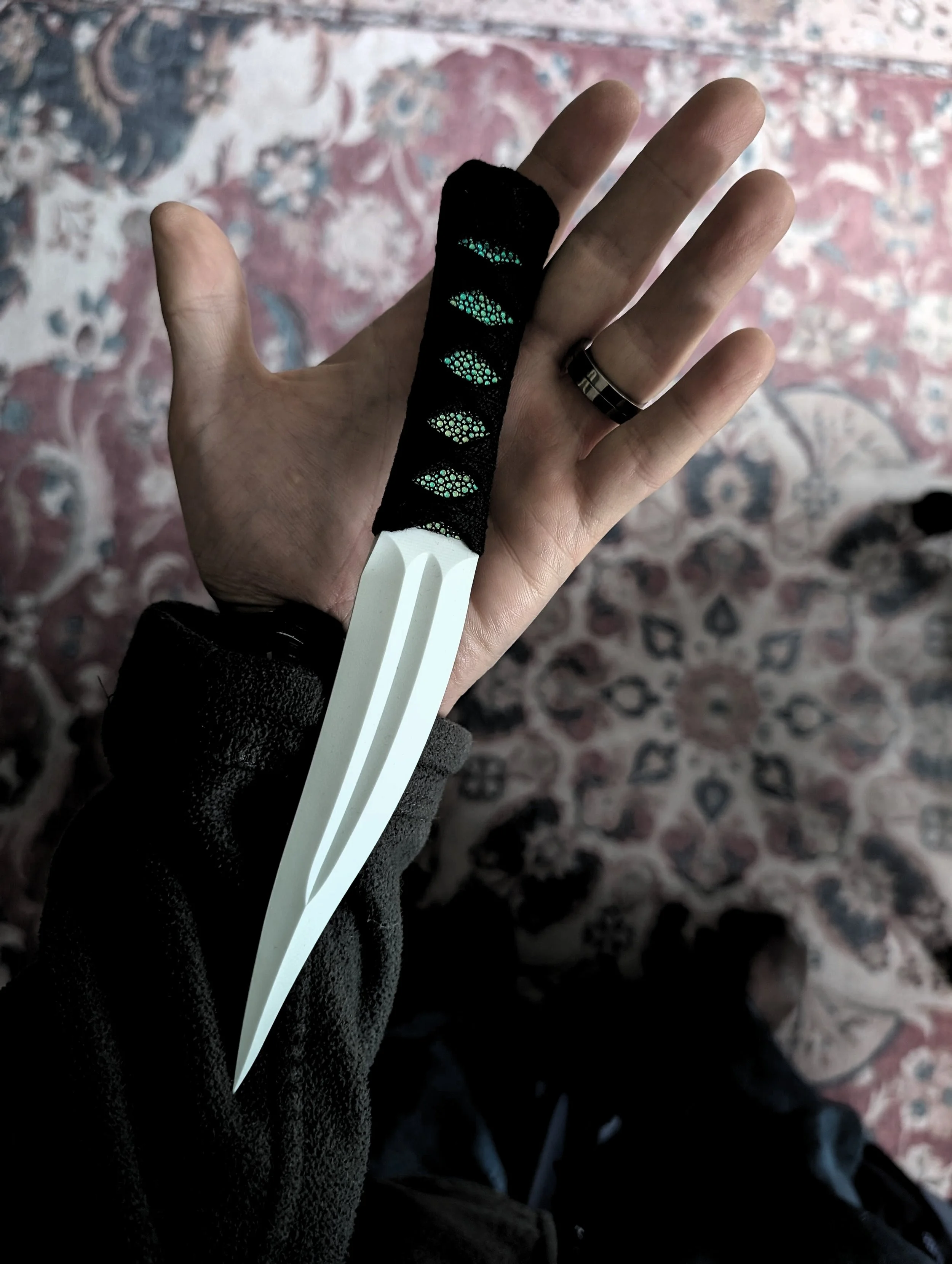
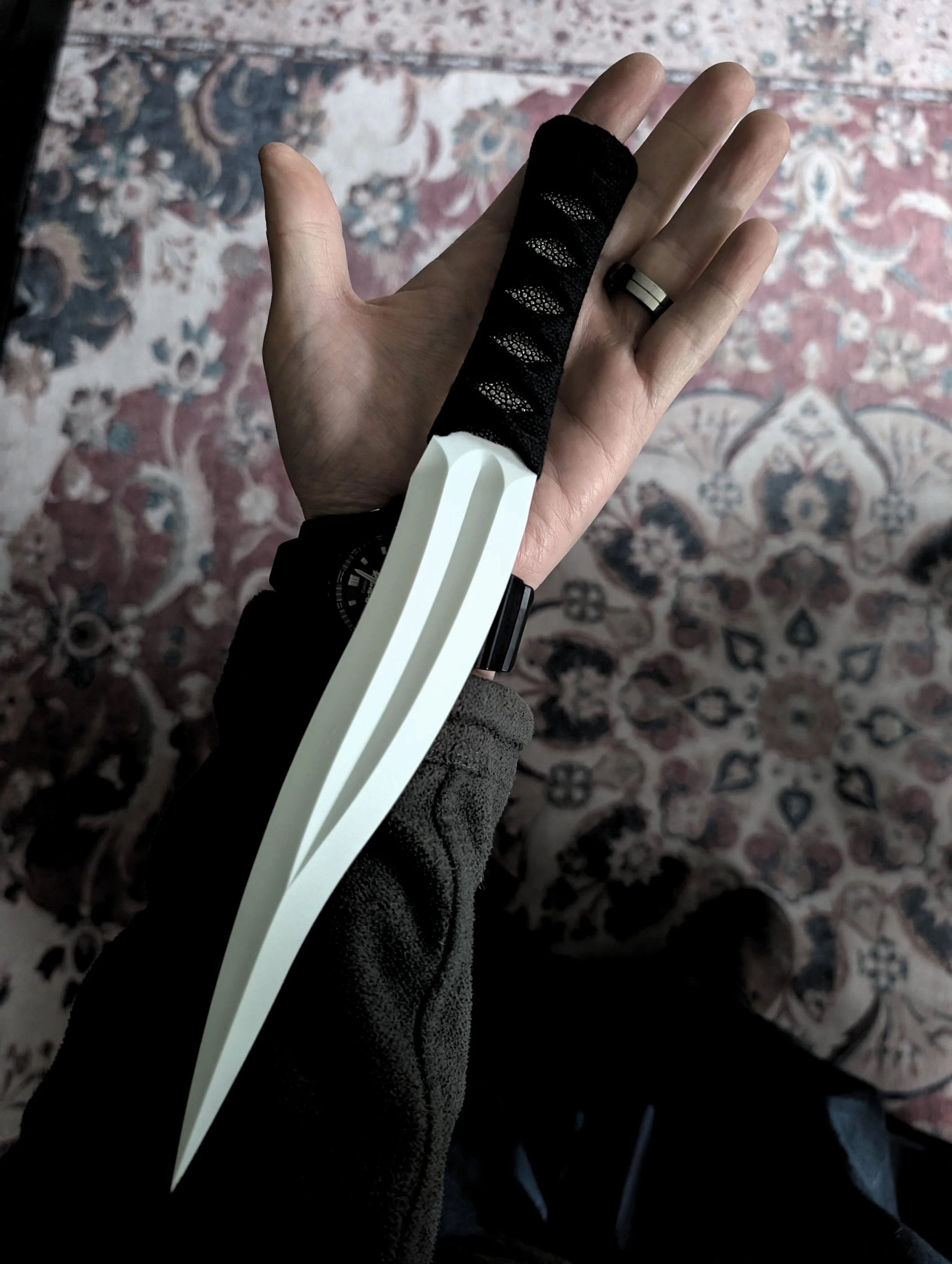
Our crysknives are a popular, if eclectic, item. G10 knives with beautiful detailing and a little artistic flair turn out to have a real following. We’re developing two new versions that extend the range in both directions, one smaller and one larger.
What the Trails Said About Public Lands
Let’s be honest: for the last 40 years or so, American foreign policy has produced some stunning cock-ups, and it feels like they’ve cost us a lot of standing in the world. This isn’t a political blog, but stick with me. I’m going somewhere with this.
The hike came to roughly 50 miles over four days, which isn’t a ton. What stuck with me wasn’t the distance, though. It was two things.
First, everyone was friendly. It didn’t matter who you were, where you were from, or whether you looked like a seasoned hiker or a guy in slip-on shoes and sweatpants on the verge of a heart attack (true story). Most people greeted me as they passed, and everyone helped everyone else. For a New England guy who heard the COVID guidance to “stay 6 feet apart” and thought “gee, that seems awful close,” this was remarkable. I just don’t expect strangers to be that friendly.
Second, at least half the people we met on the trails were visiting from outside the US. That got me thinking. We’ve made plenty of mistakes as a country, but we got at least one big thing right: we protected places like Bryce Canyon and Zion for future generations and shared them with the rest of the world. They are breathtakingly beautiful, and people travel thousands of miles to see them. That’s a pretty good reputation to have, and it’s one we earned.
Free-Viewing Stereo Photos
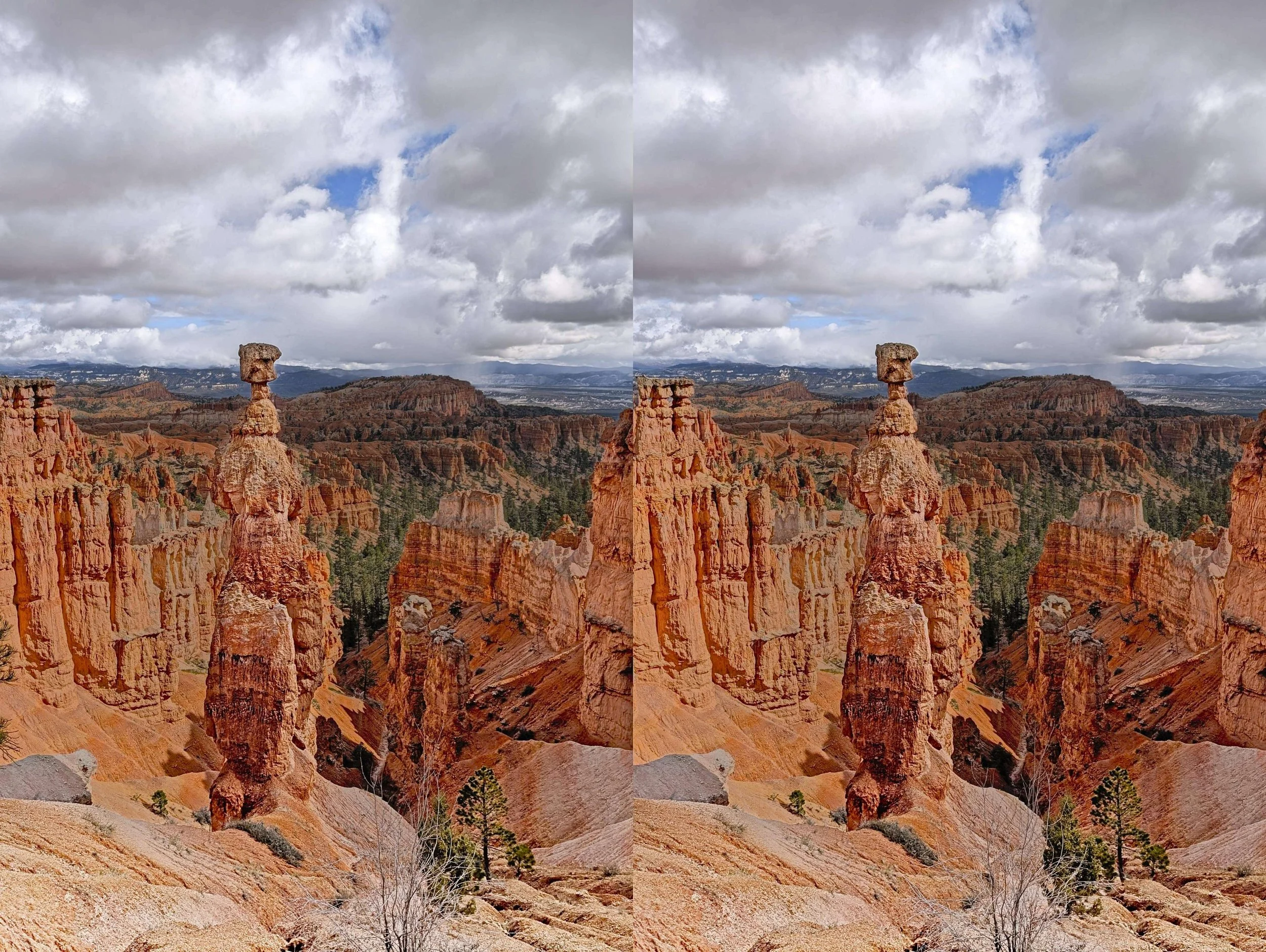
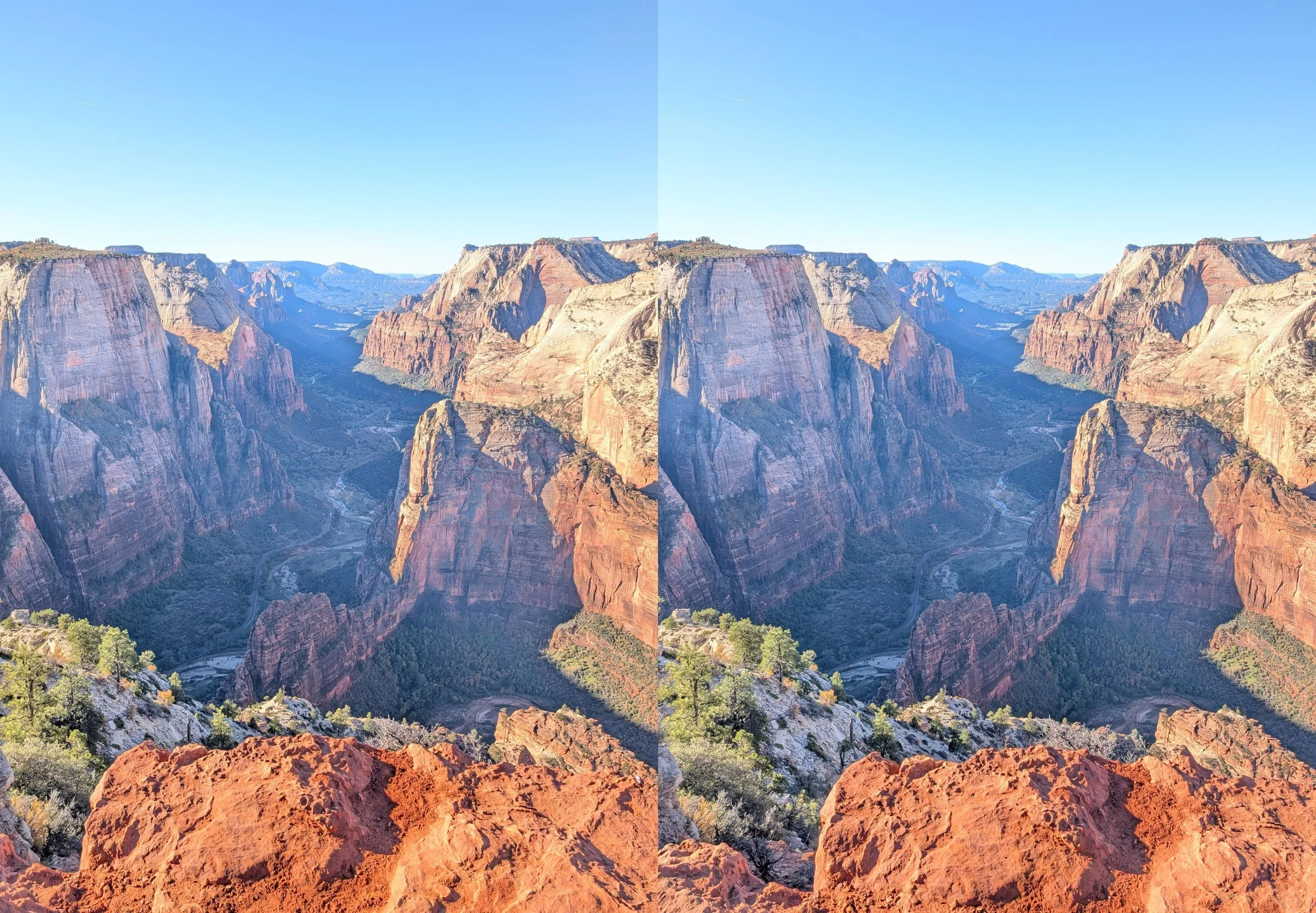
If you can free view stereo images, here are two side-by-side pairs from the trip, one from Bryce and one from Zion. Look at the screen as if you were gazing at something far behind it, so your eyes drift apart, and keep your attention on the middle image where the pair fuses. It can take a few tries. On a phone, hold it a bit farther away than usual.